
Showing posts with label Bloodshot #1. Show all posts
Showing posts with label Bloodshot #1. Show all posts
Sunday, November 18, 2012
Happy 20th Bloodshot #1
Twenty years ago today Bloodshot #1 hit the stands and the chromium age was born. Happy anniversary!


Friday, March 18, 2011
Spoof - Bloodskirt / Bloodshot
The characters of the Valiant Universe have made such an indelible mark that they have regularly been parodied (aka exploited by other publishers). In a previous post I showcased Headbanger by Parody Press, a spoof of Harbinger #1. Today I have a scan of Bloodskirt #1 by the also aptly named Spoof Comics. Bloodskirt is of course a parody of Bloodshot #1.

I only have a scan of the cover but already we can see that they are ape-ing the logo and cover art. They have turned Bloodshot into a women (funny?), given her a skirt (too funny?) and provided a little panty peek (creepy). Check out the original below.


I only have a scan of the cover but already we can see that they are ape-ing the logo and cover art. They have turned Bloodshot into a women (funny?), given her a skirt (too funny?) and provided a little panty peek (creepy). Check out the original below.

Wednesday, February 16, 2011
Wallpaper - Bloodshot #1 cover
I kind of like this desktop wallpaper thing so I made another (see the first here: Wallpaper - Archer & Armstrong line art). This time I used the Bloodshot #1 cover scan by Barry Windsor-Smith from earlier this month.

It's very simple but I think that adds to the appeal. The image is sized 1280x1040 so you might need to resize it for your own desktop.
Monday, February 14, 2011
Original Art - Bloodshot #1 cover
Today I have a treat - a scan of the original black and white ink art for the cover of Bloodshot #1 by Barry Windsor-Smith. Check it out:

The cover was not a edge to edge piece of illustration, rather a small section was drawn and then printed in chromium. The chromium card was the attached to the cover which had the price box and title logo printed on. The scan is of the foreground element only and is the first piece of art ever to be printed on chromium. For comparison, here is the cover as printed:

Tuesday, July 6, 2010
The ten most important comic books of the 1990s
Interesting article below which I have permission to reprint in its entirety.
The 1990s was an incredible decade for comics. More people were buying and reading them than ever before and, in turn, more new publishers and new titles came into being. We had the formation of the superstar independent in Image Comics and the birth of the still unequaled VALIANT Universe, a high water mark in storytelling, as well as a host of others trying to imitate the two. Gimmick covers and variants were all the rage, but we loved them and (don't tell Marvel) we still do. We were all going to be rich because the generic hot book of the week was going to be the next big thing. Well hindsight is 20/20 and with that in mind, let's chart the Ten Most Important Comic Books of the 1990s.

Number 10 - Authority #1
Authority #1 is very similar to the number one book on this list. Both books changed the way superhero teams are written, they both caused a storm when they were released, and they both brought a modern reality to comics. So, why isn't this book Number 1? Well, while the impact of the Authority in all three aspects is not as great as the Number 1 book, there is also one additional and very telling difference. In re-creating Stormwatch for the Authority, Warren Ellis fashioned characters who took matters into their own hands, cutting through the politics dealt with by the JLA and the Avengers. Both of those books, and a host of others, have adopted this approach since Ellis pioneered it, but that's where the innovation ends. The Authority is a really fun comic book that looks and feels like a blockbuster movie -- something enjoyable like Bad Boys 2 -- but not a piece of art, and certainly, not a masterpiece. Nevertheless, the innovations in illustrations and writing, and the subsequent influence on similar books, make Authority #1 a worthy entry at

Number 9 - Daredevil #1
Produced under the Marvel Knights banner, Daredevil #1 was a harbinger of things to come. Joe Quesada proved he had the skills required to innovate the production process, reimagine an ailing icon, and still keep fans happy. Daredevil #1 was a key moment on his journey to the top of Marvel's creative mountain and a forerunner for the Ultimate line. But, even more important, is the other half of the book's creative team. Long time comic book fan and successful filmmaker, Kevin Smith, blazed a trail for writers from outside the medium. Before Joss Whedon, Bryan Singer, Brad Meltzer and Orson Scott Card could make waves, Kevin Smith had to prove that fans would accept an outsider. Smith was also crucial to the formation of Hollywood's current love affair with comics. He showed studios and the world that comics were cool, both through his work writing the book, and in associating himself with the medium.

Number 8 - Solar #0
The best single issue of the decade and number four on Wizard's list of the top ten best comics over the last fifteen years. Jim Shooter, Barry Windsor-Smith and Bob Layton, all at the peak of their powers, tell the story of the birth and death, and then birth again of the VALIANT universe. Originally serialized in the first ten issues of Solar Man of the Atom, the story set the tone for every science fiction and superpowered book that has come since. Shooter used real science, and even explained complex ideas, to firmly ground his epic. But, the real genius of the book is its focus on one man, Phil Seleski, and his struggle to come to terms with waking up to find he has the power of a god. Barry Windsor-Smith provides his best work since the final issue of his Conan run, while Jim Shooter only had to wait six months to top this (but we'll get to that).

Number 7 - Astro City #1
In Astro City, Kurk Busiek created a series based on good writing and accessibility. It sparked a trend in which collectors started reading Image books for the first time and, more importantly, brought a new audience into comics. Astro City made fans of those who had never, and probably would never, have read a comic otherwise. Core titles such as Spider-man, X-Men and Superman have a steep learning curve for new readers due to their lengthy histories and the inaccessibility of the comic book medium. In Astro City, each issue is a new beginning and is presented without many of the visual and narrative shortcuts that are conventions of the comic book medium but confusing for many first-time comic readers.

Number 6 - Magnus #1
The first superhero book published by VALIANT Comics marks the birth of the only publisher to have ever seriously given Marvel and DC a run for their money. VALIANT did what Image was supposed to do: Create a roster of completely original characters under a shared universe, and they succeeded with both style and swagger. VALIANT came out of the gate with a winning formula -- a top quality product with great storytelling. The VALIANT name soon became associated with quality and everything they did turned out golden. VALIANT was the Gucci of the comics industry.
Jim Shooter began the famous Steel Nation story line in Magnus #1 and it ranks among the best of all time (#17 according to Wizard's Top 100 Trade paperbacks). Magnus #1 would have placed higher but it only set in motion what would eventually spark a revolution.

Number 5 - Marvels #1
Marvel gave this mini-series the royal treatment with high quality paper and a transparent acetate cover, but the real quality was from the creative team. Following the approach pioneered by VALIANT Comics, Kurk Busiek chronicled the beginnings of the Marvel universe in a distinctly real setting. We see the first Marvel heroes interact with a world that isn't used to superpowers or heroism. More interestingly, and probably more importantly, this book was fully painted by (and marks the break-out of) Alex Ross. Ross has since gone on to define comics for a generation of readers and creators with his vividly realistic paintings. Like the greats before him (Kirby, Steranko, Miller, etc.), Ross has since become a public figure and a respected artist throughout the world -- but it all started right here.

Number 4 - X-Men #1
Marvel found a winning formula with Spider-Man #1 and repeated it less than a year later, but this time they pulled out all the stops. They united one of the hottest artists in the field, Jim Lee, with one of the hottest properties, the X-Men, in a new series with five different covers on the first issue. The comic had one of the biggest marketing campaigns in comics history: Marvel was aiming to break records, and break records they did. X-Men #1 still stands as the highest print-ordered comic in history with more than eight million copies in all versions.
Among collectors, the pairing of Lee and the X-Men further established the mental association of a big talent on a popular book equaling a good product, which led to a string of new short-lived titles with big-name creators. More importantly, it proved the power of the industry's superstar artists and set the stage for their eventual departure and the formation of Image Comics.

Number 3 - Superman #75
As the story goes, the day Superman #75 hit the stands there were lines outside comic shops across the country. The Death of Superman was a major news story that was covered by the likes of CNN and Time magazine. It was the death of an icon -- probably the most famous character in all of comicdom. In hindsight, it was nothing more than a publicity stunt by DC, but it worked spectacularly. Superman #75 had one of the largest audiences in comics' history, and in turn, one of the largest print runs. Suddenly everybody was collecting comics and the hobby was flooded with speculators. Sports card dealers (who had just suffered a huge crash in their own market) shifted their attention to comics, creating a vast new audience. The entire industry benefited, but at a great cost: Event books and gimmicks were all the rage, and The Death of Superman was soon followed by major changes to almost every character conceivable -- most memorably Batman, Green Lantern and Daredevil. The flashy covers and excessive hype got old quickly and much of the new audience moved onto the next hottest craze, sending the industry into a low it's still struggling to overcome. Eventually, Superman did return, but Superman #75 still stands as a unique moment in the decade - when the eyes of the world were focused on comic books, a feat not repeated until the opening weekend of the first Spider-Man movie.

Number 2 - Spawn #1
At the height of his popularity, Todd McFarlane left Marvel and Spider-Man behind to create his own character. Spawn's inaugural issue was one of the top selling comics in history, and unlike a number of other Image creations, has stood the test of time -- the book just reached its 150th issue. But, McFarlane did more than create a hit book with Spawn. Spawn #1 is the book that built an empire. MacFarlane has since added to his publishing wing by forming a major toy company built on the Spawn characters and a multimedia division that has produced a Spawn animated series and a movie.
Often recognized as one of the most important characters created since Stan Lee and Jack Kirby created the Marvel icons, Spawn might have nabbed the number one spot on this list had the character been a more exceptional creation. But the book's writing was never a big part of its success. As part of the first wave of books released under the Image Comics banner, Spawn #1 is a marker of an event that changed the face of the comics industry. Image comics is the creator-owned start-up founded by the seven, now famous and, in some cases infamous, superstar artists of the comics world. Image was supposed to break up the monopoly of Marvel and DC, and for a while it looked like it might. Today, Image continues to provide creators with an alternative publishing route for their properties and remains a symbol of independence for the industry.
And the comic book of the decade is...

Number 1 - Harbinger #1
In the editorial, VALIANT's Editor in Chief, Jim Shooter, tells us that the book we hold in our hands is the most important since Avengers #1. Thirteen years later and I'm still not sure that he was wrong. When this book was first released it was a national sensation. Every kid worth his polybag and backing board just had to have one, and the resulting frenzy sent the book to the top of Wizard's Top Ten Hottest Books List for a then-record four months. What's more, the demand didn't stop even when the book began selling for well over $100. When it was good, Harbinger was without a doubt one of the best written books in comics history. The first story line ( Children of the Eighth Day) deserves to be uttered in the same breath as the masterpieces of the art form; Watchmen, Maus, Dark Knight Returns, etc..
The book's creative team reinvented the genre popularized by the X-Men. The good guys did unforgivable things, the bad guys were usually more right then the good guys, and best of all, they behaved like real people would -- In the VALIANT Universe, when you want to kill your enemy, you don't challenge him to a stand-off at your base on the moon (this is actually a plot involving the X-Men), you send someone he trusts to shoot him in the back of the head. Things happen in Harbinger that would never happen in an X-Men book (for those that know Harbinger think Torque), but happen all the time in the movies and other arts, and definitely in real life. Most importantly, Harbinger was the book that sparked a revolution in comics. Harbinger was the Pulp Fiction of the comics industry -- an indie critical and commercial smash hit that changed all the rules and broke down the door for a host of independent talent. Without Harbinger, VALIANT wouldn't have become the third largest publisher as quickly as it did. Without Harbinger, there wouldn't have been an Ultraverse Universe or a Crossgen Universe. Without Harbinger, there wouldn't have been a wake-up call for the rest of the industry to move away from gimmicks and hype, and back to quality story-telling.
Twenty more that almost made the list:
Adventures of Superman #500 (DC) - The sequel to Superman #75 with equally high orders, the book's poor quality left a bad taste in readers mouths' and set the ball rolling that would crash the industry.
 Bloodshot #1 (VALIANT) - The day Death of Superman hit the stands there wasn't one line outside comic shops across the country, there were two -- one for Superman and one for Bloodshot.
Bone #1 - The biggest consistently successful independent book and the second independent book to achieve success after Cerebus.
Dark Horse Presents 5th Anniversary Special (Dark Horse) - The first appearance of Sin City. Miller's creation has shown outsiders that comics are more than superheroes.
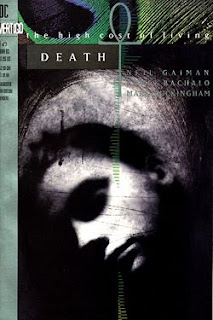 Death, the High Cost of Living #1 (Vertigo) - The first book published under the Vertigo Comics banner.
Gen 13 #1 (Image) - The second hoorah of the bad girl craze and the beginning of a new slate of successful Image books.
Harbinger #0 Pink Cover (VALIANT) - The most sought-after variant of the decade and the hardest book to find from the most sought-after story-line of the decade.
Kingdom Come #1 (DC) - Cemented Alex Ross as the artist of the decade and pushed the back-to-basics writing approach into overdrive.
Lady Death #1 (Chaos) - The start of the Bad Girl craze. Although predated by the Vamperilla mini-series, the success of Lady Death came first.
 New Mutants #87 (Marvel) - The first appearance of Cable, a major X-Men character and one of the most sought-after books of the decade.
Next Men #21 (Image) - The first appearance of Hellboy. A fan favorite, critical darling and blockbuster movie star.
Preacher #1 (Vertigo) - The most popular book from the Vertigo line. Preacher made writer Garth Ennis and his writing style famous.
Prime #1 (Ultraverse) - From the success of Image comics, Malibu formed Ultraverse and spent millions on marketing. Prime #1 was the flagship title and ultimately led to the computer coloring revolution.
 Rai #0 (VALIANT) - Innovations galore (enough for its own article), the bible of the VALIANT universe and possibly the best cover of the decade. This was one of the most sought-after books from Rai, one of the most famous characters of the decade, and a strong contender for the ten most important comic books of the decade.
Spider-Man #1 (Marvel) - Paired together Todd McFarlane and Spider-Man, broke a number of sales records, and set the stage for Image comics.
Turok #1 (VALIANT) - One of the top ten largest print runs in history, a runaway video game success that brought gamers into the fold, and the first real sign that comic properties were viable for licensing.
Unity #0 (VALIANT) - The first chapter in one of the greatest company-wide crossovers in history.
 Witchblade #1 (Top Cow) - The flagship and most successful book by Top Cow. Has since become a television series, animated series and is gearing up for a feature film.
X-O Manowar #1 (VALIANT) - X-O Manowar is one of the most popular characters created in the past 15 years and issue #1 is his first appearance.
Youngblood #1 (Image) - The first book published under the Image Comics banner.
The ten most important comic books of the 1990s
The 1990s was an incredible decade for comics. More people were buying and reading them than ever before and, in turn, more new publishers and new titles came into being. We had the formation of the superstar independent in Image Comics and the birth of the still unequaled VALIANT Universe, a high water mark in storytelling, as well as a host of others trying to imitate the two. Gimmick covers and variants were all the rage, but we loved them and (don't tell Marvel) we still do. We were all going to be rich because the generic hot book of the week was going to be the next big thing. Well hindsight is 20/20 and with that in mind, let's chart the Ten Most Important Comic Books of the 1990s.

Number 10 - Authority #1
Authority #1 is very similar to the number one book on this list. Both books changed the way superhero teams are written, they both caused a storm when they were released, and they both brought a modern reality to comics. So, why isn't this book Number 1? Well, while the impact of the Authority in all three aspects is not as great as the Number 1 book, there is also one additional and very telling difference. In re-creating Stormwatch for the Authority, Warren Ellis fashioned characters who took matters into their own hands, cutting through the politics dealt with by the JLA and the Avengers. Both of those books, and a host of others, have adopted this approach since Ellis pioneered it, but that's where the innovation ends. The Authority is a really fun comic book that looks and feels like a blockbuster movie -- something enjoyable like Bad Boys 2 -- but not a piece of art, and certainly, not a masterpiece. Nevertheless, the innovations in illustrations and writing, and the subsequent influence on similar books, make Authority #1 a worthy entry at

Number 9 - Daredevil #1
Produced under the Marvel Knights banner, Daredevil #1 was a harbinger of things to come. Joe Quesada proved he had the skills required to innovate the production process, reimagine an ailing icon, and still keep fans happy. Daredevil #1 was a key moment on his journey to the top of Marvel's creative mountain and a forerunner for the Ultimate line. But, even more important, is the other half of the book's creative team. Long time comic book fan and successful filmmaker, Kevin Smith, blazed a trail for writers from outside the medium. Before Joss Whedon, Bryan Singer, Brad Meltzer and Orson Scott Card could make waves, Kevin Smith had to prove that fans would accept an outsider. Smith was also crucial to the formation of Hollywood's current love affair with comics. He showed studios and the world that comics were cool, both through his work writing the book, and in associating himself with the medium.

Number 8 - Solar #0
The best single issue of the decade and number four on Wizard's list of the top ten best comics over the last fifteen years. Jim Shooter, Barry Windsor-Smith and Bob Layton, all at the peak of their powers, tell the story of the birth and death, and then birth again of the VALIANT universe. Originally serialized in the first ten issues of Solar Man of the Atom, the story set the tone for every science fiction and superpowered book that has come since. Shooter used real science, and even explained complex ideas, to firmly ground his epic. But, the real genius of the book is its focus on one man, Phil Seleski, and his struggle to come to terms with waking up to find he has the power of a god. Barry Windsor-Smith provides his best work since the final issue of his Conan run, while Jim Shooter only had to wait six months to top this (but we'll get to that).

Number 7 - Astro City #1
In Astro City, Kurk Busiek created a series based on good writing and accessibility. It sparked a trend in which collectors started reading Image books for the first time and, more importantly, brought a new audience into comics. Astro City made fans of those who had never, and probably would never, have read a comic otherwise. Core titles such as Spider-man, X-Men and Superman have a steep learning curve for new readers due to their lengthy histories and the inaccessibility of the comic book medium. In Astro City, each issue is a new beginning and is presented without many of the visual and narrative shortcuts that are conventions of the comic book medium but confusing for many first-time comic readers.

Number 6 - Magnus #1
The first superhero book published by VALIANT Comics marks the birth of the only publisher to have ever seriously given Marvel and DC a run for their money. VALIANT did what Image was supposed to do: Create a roster of completely original characters under a shared universe, and they succeeded with both style and swagger. VALIANT came out of the gate with a winning formula -- a top quality product with great storytelling. The VALIANT name soon became associated with quality and everything they did turned out golden. VALIANT was the Gucci of the comics industry.
Jim Shooter began the famous Steel Nation story line in Magnus #1 and it ranks among the best of all time (#17 according to Wizard's Top 100 Trade paperbacks). Magnus #1 would have placed higher but it only set in motion what would eventually spark a revolution.

Number 5 - Marvels #1
Marvel gave this mini-series the royal treatment with high quality paper and a transparent acetate cover, but the real quality was from the creative team. Following the approach pioneered by VALIANT Comics, Kurk Busiek chronicled the beginnings of the Marvel universe in a distinctly real setting. We see the first Marvel heroes interact with a world that isn't used to superpowers or heroism. More interestingly, and probably more importantly, this book was fully painted by (and marks the break-out of) Alex Ross. Ross has since gone on to define comics for a generation of readers and creators with his vividly realistic paintings. Like the greats before him (Kirby, Steranko, Miller, etc.), Ross has since become a public figure and a respected artist throughout the world -- but it all started right here.

Number 4 - X-Men #1
Marvel found a winning formula with Spider-Man #1 and repeated it less than a year later, but this time they pulled out all the stops. They united one of the hottest artists in the field, Jim Lee, with one of the hottest properties, the X-Men, in a new series with five different covers on the first issue. The comic had one of the biggest marketing campaigns in comics history: Marvel was aiming to break records, and break records they did. X-Men #1 still stands as the highest print-ordered comic in history with more than eight million copies in all versions.
Among collectors, the pairing of Lee and the X-Men further established the mental association of a big talent on a popular book equaling a good product, which led to a string of new short-lived titles with big-name creators. More importantly, it proved the power of the industry's superstar artists and set the stage for their eventual departure and the formation of Image Comics.

Number 3 - Superman #75
As the story goes, the day Superman #75 hit the stands there were lines outside comic shops across the country. The Death of Superman was a major news story that was covered by the likes of CNN and Time magazine. It was the death of an icon -- probably the most famous character in all of comicdom. In hindsight, it was nothing more than a publicity stunt by DC, but it worked spectacularly. Superman #75 had one of the largest audiences in comics' history, and in turn, one of the largest print runs. Suddenly everybody was collecting comics and the hobby was flooded with speculators. Sports card dealers (who had just suffered a huge crash in their own market) shifted their attention to comics, creating a vast new audience. The entire industry benefited, but at a great cost: Event books and gimmicks were all the rage, and The Death of Superman was soon followed by major changes to almost every character conceivable -- most memorably Batman, Green Lantern and Daredevil. The flashy covers and excessive hype got old quickly and much of the new audience moved onto the next hottest craze, sending the industry into a low it's still struggling to overcome. Eventually, Superman did return, but Superman #75 still stands as a unique moment in the decade - when the eyes of the world were focused on comic books, a feat not repeated until the opening weekend of the first Spider-Man movie.

Number 2 - Spawn #1
At the height of his popularity, Todd McFarlane left Marvel and Spider-Man behind to create his own character. Spawn's inaugural issue was one of the top selling comics in history, and unlike a number of other Image creations, has stood the test of time -- the book just reached its 150th issue. But, McFarlane did more than create a hit book with Spawn. Spawn #1 is the book that built an empire. MacFarlane has since added to his publishing wing by forming a major toy company built on the Spawn characters and a multimedia division that has produced a Spawn animated series and a movie.
Often recognized as one of the most important characters created since Stan Lee and Jack Kirby created the Marvel icons, Spawn might have nabbed the number one spot on this list had the character been a more exceptional creation. But the book's writing was never a big part of its success. As part of the first wave of books released under the Image Comics banner, Spawn #1 is a marker of an event that changed the face of the comics industry. Image comics is the creator-owned start-up founded by the seven, now famous and, in some cases infamous, superstar artists of the comics world. Image was supposed to break up the monopoly of Marvel and DC, and for a while it looked like it might. Today, Image continues to provide creators with an alternative publishing route for their properties and remains a symbol of independence for the industry.
And the comic book of the decade is...

Number 1 - Harbinger #1
In the editorial, VALIANT's Editor in Chief, Jim Shooter, tells us that the book we hold in our hands is the most important since Avengers #1. Thirteen years later and I'm still not sure that he was wrong. When this book was first released it was a national sensation. Every kid worth his polybag and backing board just had to have one, and the resulting frenzy sent the book to the top of Wizard's Top Ten Hottest Books List for a then-record four months. What's more, the demand didn't stop even when the book began selling for well over $100. When it was good, Harbinger was without a doubt one of the best written books in comics history. The first story line ( Children of the Eighth Day) deserves to be uttered in the same breath as the masterpieces of the art form; Watchmen, Maus, Dark Knight Returns, etc..
The book's creative team reinvented the genre popularized by the X-Men. The good guys did unforgivable things, the bad guys were usually more right then the good guys, and best of all, they behaved like real people would -- In the VALIANT Universe, when you want to kill your enemy, you don't challenge him to a stand-off at your base on the moon (this is actually a plot involving the X-Men), you send someone he trusts to shoot him in the back of the head. Things happen in Harbinger that would never happen in an X-Men book (for those that know Harbinger think Torque), but happen all the time in the movies and other arts, and definitely in real life. Most importantly, Harbinger was the book that sparked a revolution in comics. Harbinger was the Pulp Fiction of the comics industry -- an indie critical and commercial smash hit that changed all the rules and broke down the door for a host of independent talent. Without Harbinger, VALIANT wouldn't have become the third largest publisher as quickly as it did. Without Harbinger, there wouldn't have been an Ultraverse Universe or a Crossgen Universe. Without Harbinger, there wouldn't have been a wake-up call for the rest of the industry to move away from gimmicks and hype, and back to quality story-telling.
Twenty more that almost made the list:
Adventures of Superman #500 (DC) - The sequel to Superman #75 with equally high orders, the book's poor quality left a bad taste in readers mouths' and set the ball rolling that would crash the industry.

Bone #1 - The biggest consistently successful independent book and the second independent book to achieve success after Cerebus.
Dark Horse Presents 5th Anniversary Special (Dark Horse) - The first appearance of Sin City. Miller's creation has shown outsiders that comics are more than superheroes.

Gen 13 #1 (Image) - The second hoorah of the bad girl craze and the beginning of a new slate of successful Image books.
Harbinger #0 Pink Cover (VALIANT) - The most sought-after variant of the decade and the hardest book to find from the most sought-after story-line of the decade.
Kingdom Come #1 (DC) - Cemented Alex Ross as the artist of the decade and pushed the back-to-basics writing approach into overdrive.
Lady Death #1 (Chaos) - The start of the Bad Girl craze. Although predated by the Vamperilla mini-series, the success of Lady Death came first.

Next Men #21 (Image) - The first appearance of Hellboy. A fan favorite, critical darling and blockbuster movie star.
Preacher #1 (Vertigo) - The most popular book from the Vertigo line. Preacher made writer Garth Ennis and his writing style famous.
Prime #1 (Ultraverse) - From the success of Image comics, Malibu formed Ultraverse and spent millions on marketing. Prime #1 was the flagship title and ultimately led to the computer coloring revolution.

Spider-Man #1 (Marvel) - Paired together Todd McFarlane and Spider-Man, broke a number of sales records, and set the stage for Image comics.
Turok #1 (VALIANT) - One of the top ten largest print runs in history, a runaway video game success that brought gamers into the fold, and the first real sign that comic properties were viable for licensing.
Unity #0 (VALIANT) - The first chapter in one of the greatest company-wide crossovers in history.

X-O Manowar #1 (VALIANT) - X-O Manowar is one of the most popular characters created in the past 15 years and issue #1 is his first appearance.
Youngblood #1 (Image) - The first book published under the Image Comics banner.
Sunday, May 16, 2010
Magnus Robot Fighter #3 - The Cover
In honor of my very first post I'm going to talk a little about the cover of Magnus Robot Fighter #3, how I became a Valiant fan and how I began reading my Valiant comics. Now, I'm a comic book child of the 1990s. I got into comics because of the excitement they were generating. I remember the Death of Superman, the hologram covers celebrating Spider-Man's 30th anniversary and the launch of Image Comics. But the event that people seemed the most excited about back then was the birth and rise of Valiant Comics. My friends and I would read in Wizard Magazine about this new company whose books were rare but also in demand because they were telling great stories and we would dream of owning them. I managed to get my hands on some early X-O Manowar issues and we all bought our copies of Bloodshot #1 but none of us could afford or find the A-grade Valiant back issues (save for one friend who managed to snag a copy of Magnus Robot Fighter #12, and I still hate him for it). So we were left no choice but to oogle the cover images published in magazines and dream of what could be.
About a decade later. Acclaim Entertainment has bought Valiant and completely mismanaged it. The size of the comic book industry has nose dived. Valiant back issues are cheaper than they have been since the day the books were released. And I am feeling the urge to take a trip down memory lane. I hop on eBay and find a set of Magnus Robot Fighter #1-4 with the Magnus Robot Fighter #0 coupons and trading cards still intact for less than $15 shipped. Lucky day! When the package arrives, I pull out the books and proudly look them over. Finally, I own my first A-grade Valiant back issues. It's sad, I had dreamed of owning books like these so many times when I was younger that some part of me still doesn't believe it's happening. The feeling is somewhat surreal. Like I am in one of those dreams now. In typical 90s comic book collector mentality, I flick through the books but don't read them. Instead, they are bagged, boarded and stored carefully. But not forgotten. Like a little boy and his treasure, I think about them all the time. Everyday, I pull them out and look them over again. Extracting every ounce of pleasure from their physicality. These are no longer just pictures in a magazine. They are real and they are mine.
The turning point came when I had to fly home for Christmas. I wasn't going to leave without the books. Frankly, I didn't want to be away from them for two weeks. But what if I damage them? They may not be as expensive as they once were but they're still rare I think. I have a duty to ensure these copies are preserved. I better pack them in my carry on to be safe.
The flight is delayed and I have three hours to kill at the airport. I start looking over the bagged and boarded books again. Should I get some food? Nah, I'm not hungry. I really starting to focus on the cover art of the books now. Maybe I should buy a magazine to read while I wait for the flight. I'm looking at the cover to Magnus Robot Fighter #3 now and for the first time I'm starting to think about the characters on the cover. Who they are and what they are doing. What am I going to do for three hours? Wait a minute. What have I been thinking? I should just read these! The breakthrough has been made. I have taken my first step towards a richer though less practiced comic book hobby - reading.

So what was it about the cover that helped me make the breakthrough? Well, I've always loved sci-fi. And I've had this fantasy about reading a great obscure sci-fi novel. In my mind its been in the form of some beat up paperback from the 70s and it has this great sci-fi painted cover (the sci-fi equivalent of Frazetta). I've bought tons of beat up paperbacks with great covers and never found one that quenched the thirst. Here I think I was trying again. The cover tells a story through the actions and emotions of the characters on it. It's very Philip K. Dick? Or maybe something about the colors and lighting remind of Ridley Scott. There's something sexy about it too. The way she holds out her wrist, it's very graceful. And the mirror excentuates the sex appeal. It plays into the objectification of the female body. She is female right? I mean, shes a cyborg? Or is she a robot? And who is that guy spying on her? A rapist? A villain? Or someone stumbling onto something new and exciting? I had to know who this woman was and what she was doing. So I dived in. I started reading issue #3 and quickly found I was in the middle of a larger story. These were not individual stories told one per comic. I had no choice I would have to read all my issues and resign my copies of Magnus Robot Fighter #1-4 to reader grade. But wow was it worth it. Steel Nation (the story contained in Magnus Robot Fighter #1-4) was my gateway into Valiant. It's the single greatest story I've ever read in any medium. It's a masterpiece...but that's a story for another time.
About a decade later. Acclaim Entertainment has bought Valiant and completely mismanaged it. The size of the comic book industry has nose dived. Valiant back issues are cheaper than they have been since the day the books were released. And I am feeling the urge to take a trip down memory lane. I hop on eBay and find a set of Magnus Robot Fighter #1-4 with the Magnus Robot Fighter #0 coupons and trading cards still intact for less than $15 shipped. Lucky day! When the package arrives, I pull out the books and proudly look them over. Finally, I own my first A-grade Valiant back issues. It's sad, I had dreamed of owning books like these so many times when I was younger that some part of me still doesn't believe it's happening. The feeling is somewhat surreal. Like I am in one of those dreams now. In typical 90s comic book collector mentality, I flick through the books but don't read them. Instead, they are bagged, boarded and stored carefully. But not forgotten. Like a little boy and his treasure, I think about them all the time. Everyday, I pull them out and look them over again. Extracting every ounce of pleasure from their physicality. These are no longer just pictures in a magazine. They are real and they are mine.
The turning point came when I had to fly home for Christmas. I wasn't going to leave without the books. Frankly, I didn't want to be away from them for two weeks. But what if I damage them? They may not be as expensive as they once were but they're still rare I think. I have a duty to ensure these copies are preserved. I better pack them in my carry on to be safe.
The flight is delayed and I have three hours to kill at the airport. I start looking over the bagged and boarded books again. Should I get some food? Nah, I'm not hungry. I really starting to focus on the cover art of the books now. Maybe I should buy a magazine to read while I wait for the flight. I'm looking at the cover to Magnus Robot Fighter #3 now and for the first time I'm starting to think about the characters on the cover. Who they are and what they are doing. What am I going to do for three hours? Wait a minute. What have I been thinking? I should just read these! The breakthrough has been made. I have taken my first step towards a richer though less practiced comic book hobby - reading.

So what was it about the cover that helped me make the breakthrough? Well, I've always loved sci-fi. And I've had this fantasy about reading a great obscure sci-fi novel. In my mind its been in the form of some beat up paperback from the 70s and it has this great sci-fi painted cover (the sci-fi equivalent of Frazetta). I've bought tons of beat up paperbacks with great covers and never found one that quenched the thirst. Here I think I was trying again. The cover tells a story through the actions and emotions of the characters on it. It's very Philip K. Dick? Or maybe something about the colors and lighting remind of Ridley Scott. There's something sexy about it too. The way she holds out her wrist, it's very graceful. And the mirror excentuates the sex appeal. It plays into the objectification of the female body. She is female right? I mean, shes a cyborg? Or is she a robot? And who is that guy spying on her? A rapist? A villain? Or someone stumbling onto something new and exciting? I had to know who this woman was and what she was doing. So I dived in. I started reading issue #3 and quickly found I was in the middle of a larger story. These were not individual stories told one per comic. I had no choice I would have to read all my issues and resign my copies of Magnus Robot Fighter #1-4 to reader grade. But wow was it worth it. Steel Nation (the story contained in Magnus Robot Fighter #1-4) was my gateway into Valiant. It's the single greatest story I've ever read in any medium. It's a masterpiece...but that's a story for another time.
Subscribe to:
Posts (Atom)
